
Intern Highlight from the Mellon Opportunity for Diversity in Conservation Program
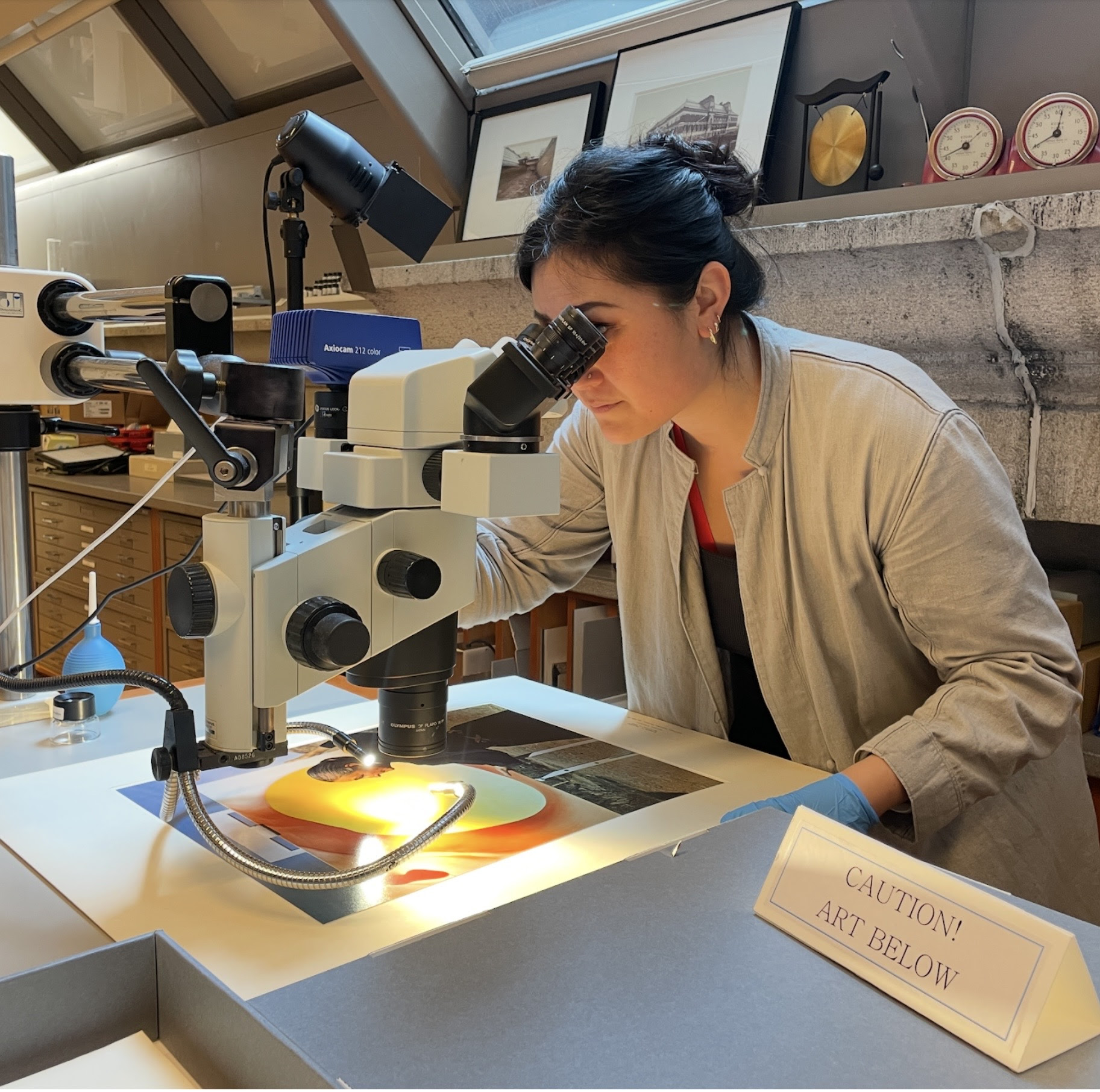
Marianne Koo carrying out process identification of a photograph under magnification. Image Credit: Lucia Elledge
Greetings from the Mellon Opportunity for Diversity in Conservation Program,
We’re excited to share the progress of another one of our past participants: Marianne Koo! Marianne joined the summer 2024 Mellon workshop before completing an internship at the Metropolitan Museum of Art in NY this past summer. Please see below for her story.
All our best,
The Mellon Opportunity Team
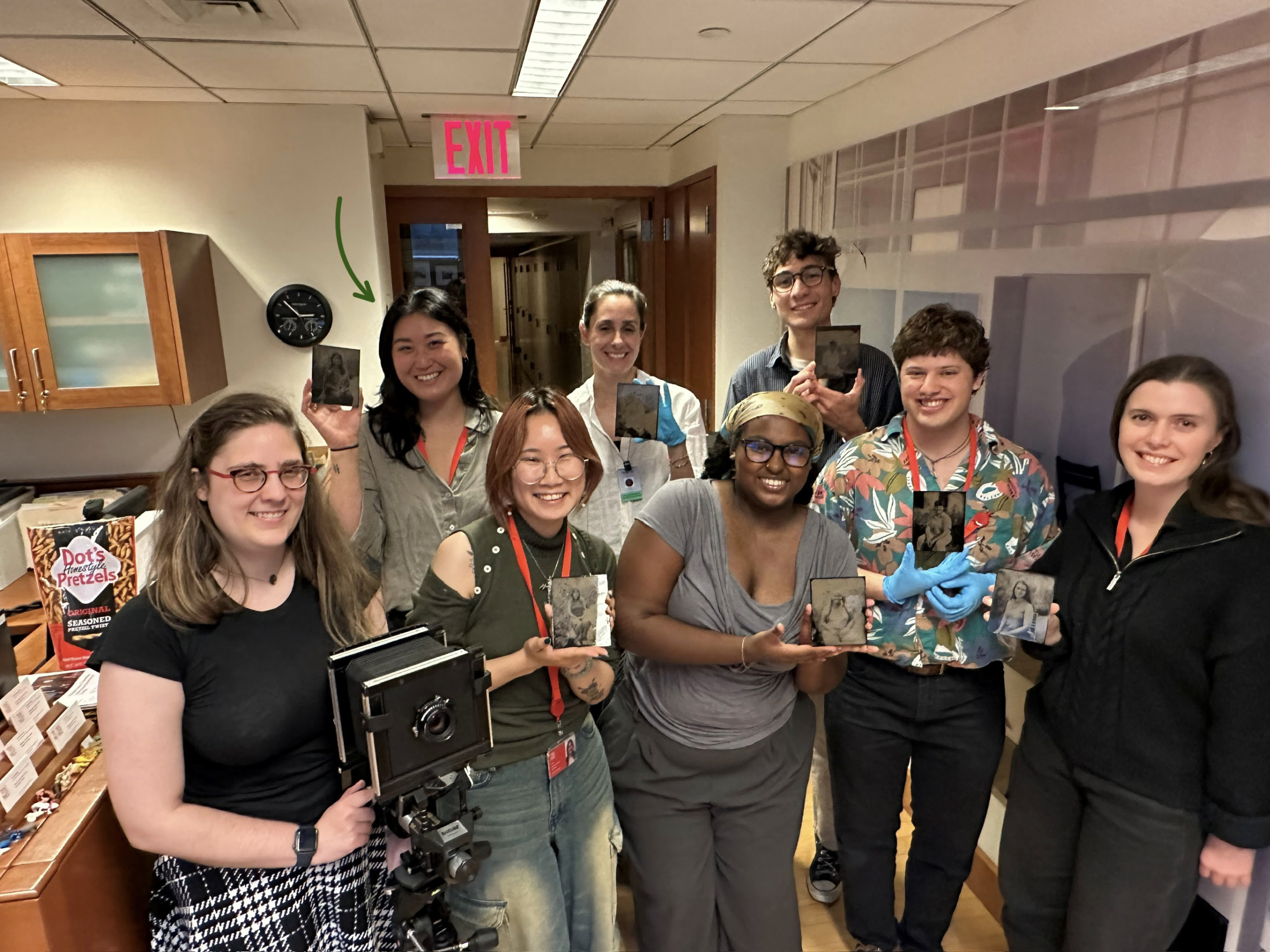
Marianne (back left) with curatorial and conservation interns, posing with tintypes that were exposed on The Met’s rooftop. Image Credit: Nora Kennedy
In Marianne’s Own Words
Hello! I’m Marianne Koo, a participant of the 2024 Mellon Opportunity for Diversity in Conservation Workshop and a member of the 2025 Internship cohort. Prior to starting my pre-program journey, I graduated with a BFA in Industrial Design from the Rhode Island School of Design and worked professionally as a designer for 12 years. As an industrial designer, I’ve developed a strong understanding of manufacturing processes and material properties, and an appreciation for the (often) nonlinear design process. I’ve always drawn inspiration from art and design of the past in my creative process, and after 12 years of designing and bringing new products into the world I felt compelled to reverse course and preserve that source of inspiration for future generations.
While I’ve long suspected that my heart was set on paintings conservation, I was thrilled by the opportunity to spend my internship at The Metropolitan Museum of Art (The Met) between the Paintings and Photograph Conservation Departments as a MuSe intern. During my time with the photograph conservation team, I helped with a massive preventive conservation initiative that involved cataloguing and condition checking over 200 color photographs in The Met’s collection. This work supported their transfer to freezer storage off-site, a critical preservation strategy for vulnerable color photographic materials. I learned how to identify photographic processes, support materials, and common condition issues, and best practices for proper handling of photographic materials. Aside from the immersive learning experience, I was so grateful to spend time up-close with The Met’s unbelievable collection, and gained a direct understanding of how improper storage conditions contribute to the deterioration of color photographs.
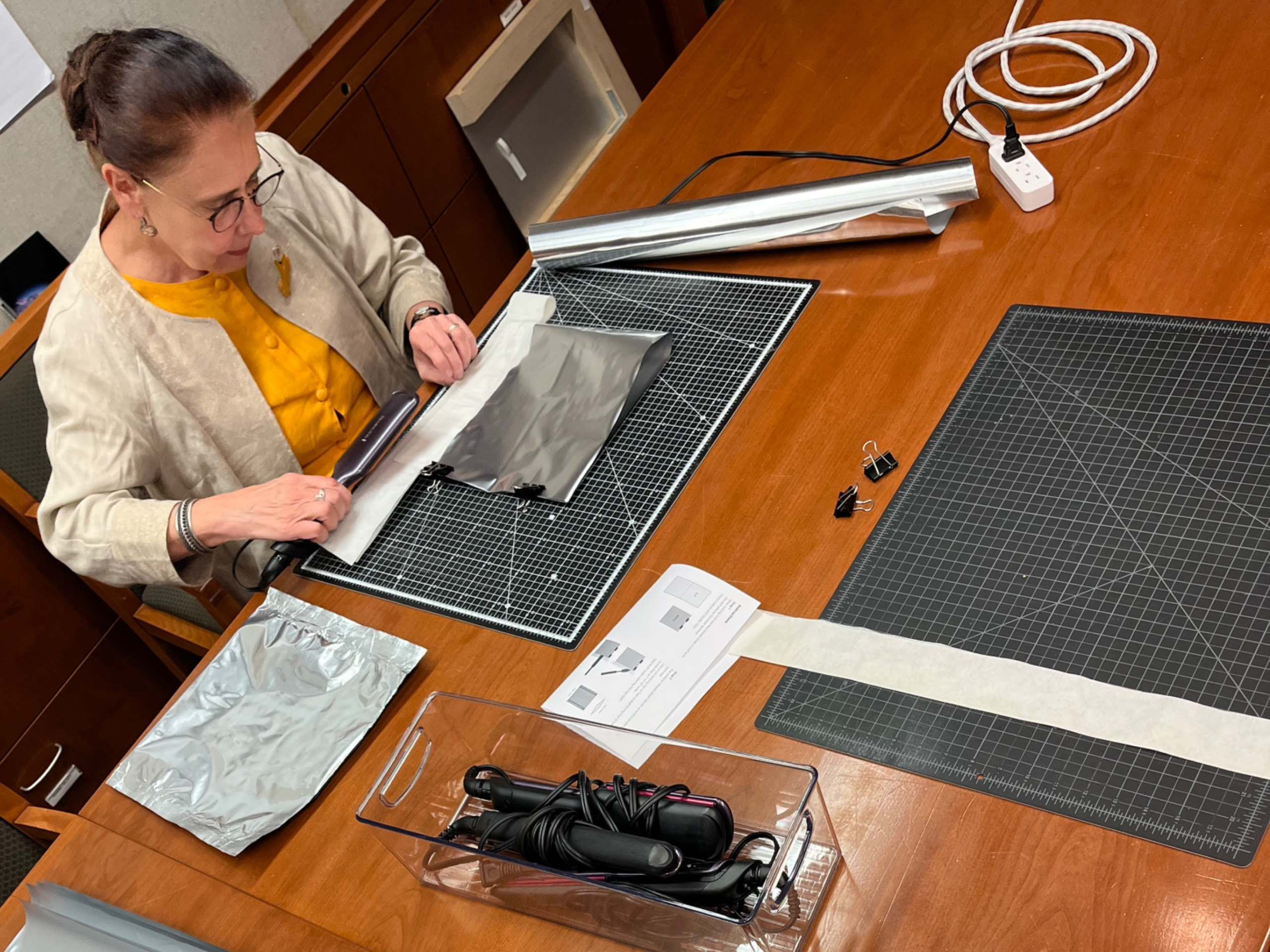
Learning how to make MarvelSeal packaging for Time-Based Media materials from Sherman Fairchild Conservator in Charge, Nora Kennedy
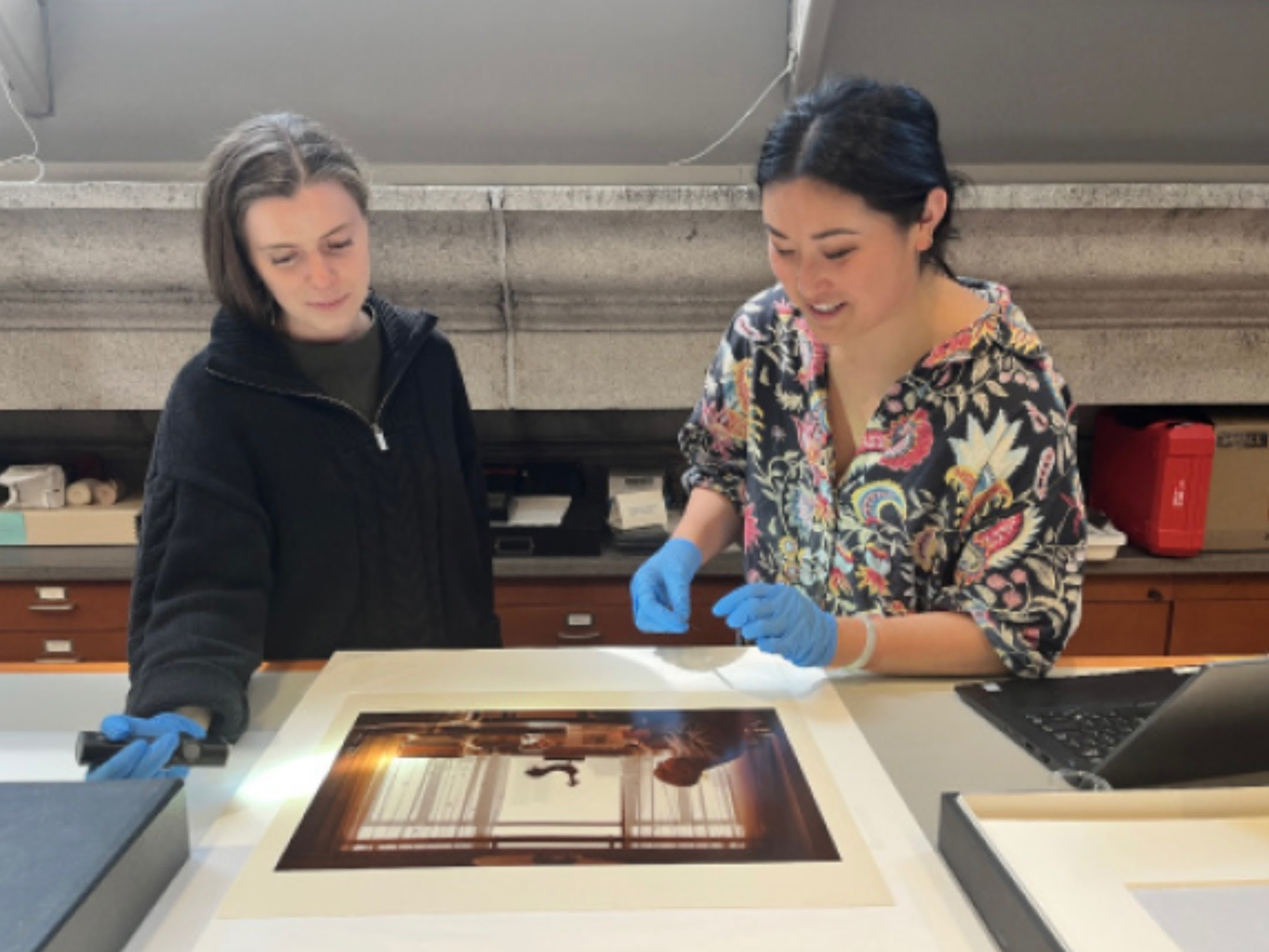
Examining Kertész Reading by Todd Weinstein (1986.1173) with fellow intern Lucia. Image credit: Tess Hamilton.
In the Paintings Conservation Department, I received mentorship from associate conservator Sophie Scully, examining and imaging early Netherlandish paintings and 19th century American paintings using microscopy, X-radiography and infrared reflectography. I also spent time with conservators who specialize in the treatment of frames and wood panels, and the specialist in imaging. I helped examine and inpaint a Louis C. Tiffany frame, removed wax from the reverse of a cradled panel painting, and learned to process and stitch together raw imaging files. I learned about the specific sensitivities and considerations that influence the teams’ day-to-day workflows and developed a better understanding of the cross-functional nature of paintings conservation. By the end of the summer, I felt like a sponge having absorbed as much as I possibly could from each conservator’s (what felt like encyclopedic) knowledge of their specialty.
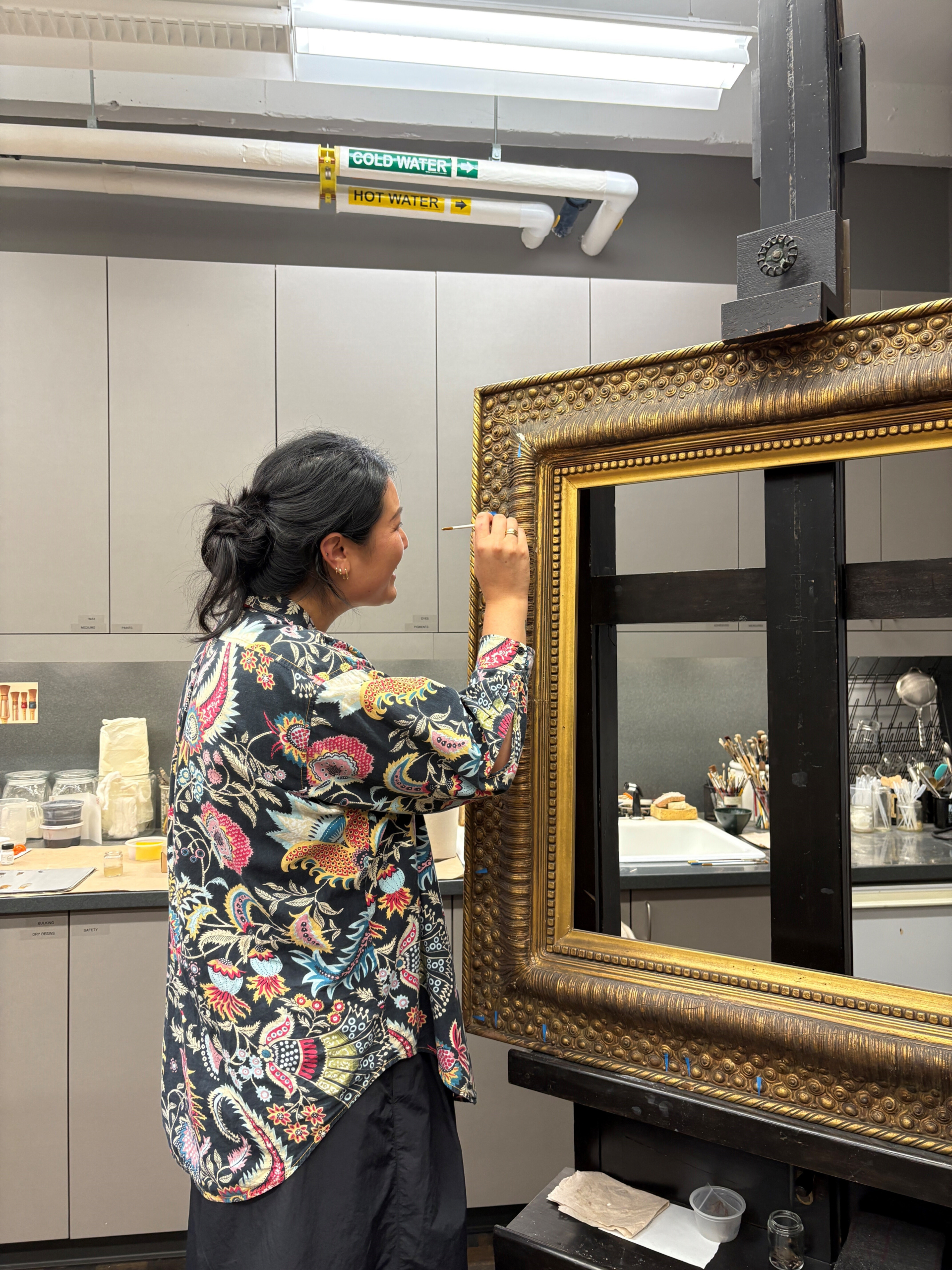
Inpainting a Louis C. Tiffany frame. Image Credit: Charlotte Hale
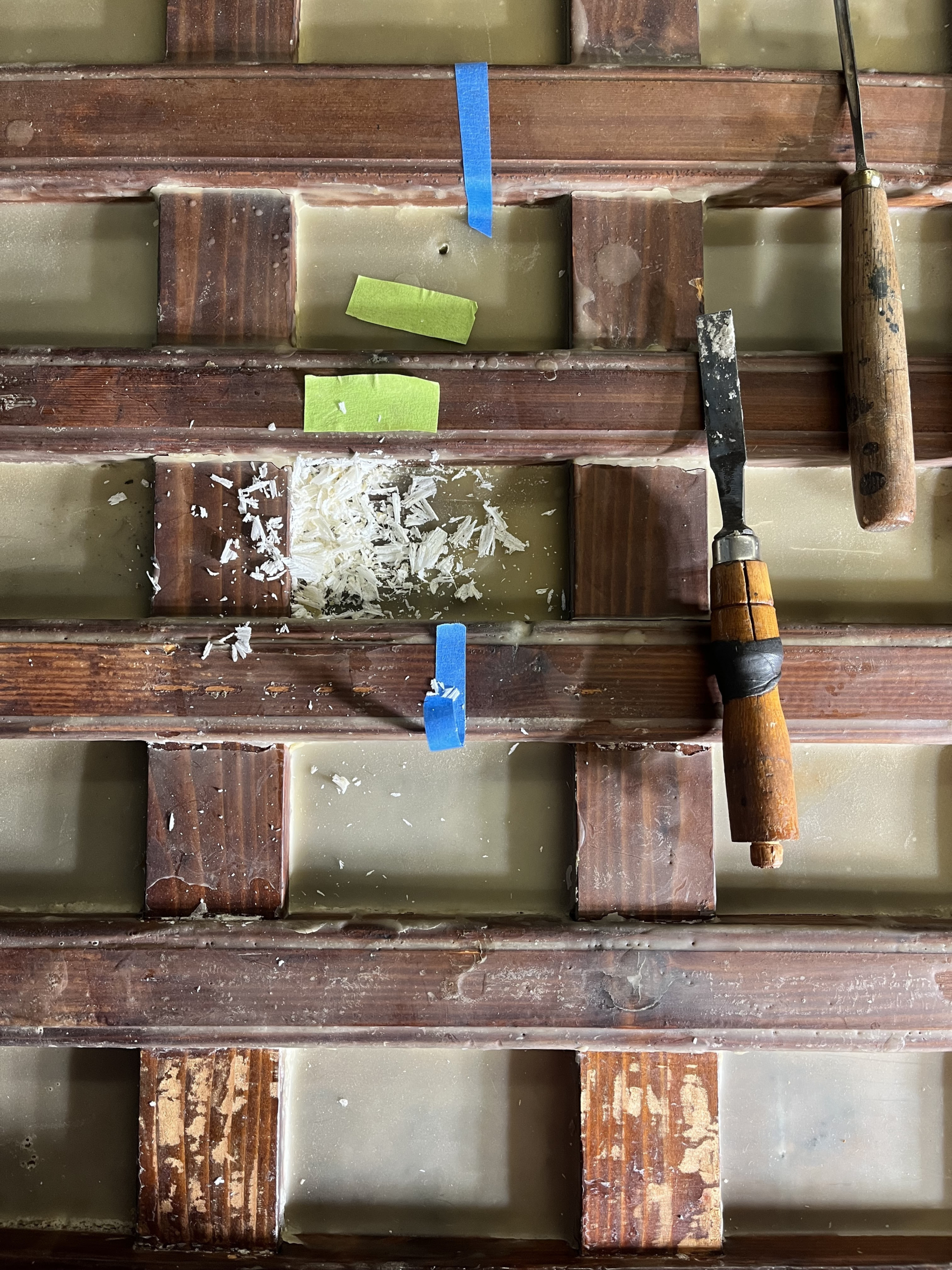
Carefully removing wax from the reverse of a cradled panel painting in order to expose and examine the wood joinery below.
And finally, as a MuSe intern, I led a public, inquiry-based tour alongside two fellow interns. Over the course of 45 minutes, this vibrant discussion tied three seemingly disparate objects to the theme of “art and intentionality”. Engaging with the public and sharing my research served as an important reminder of the museum’s role in cultural stewardship, education, and community engagement.
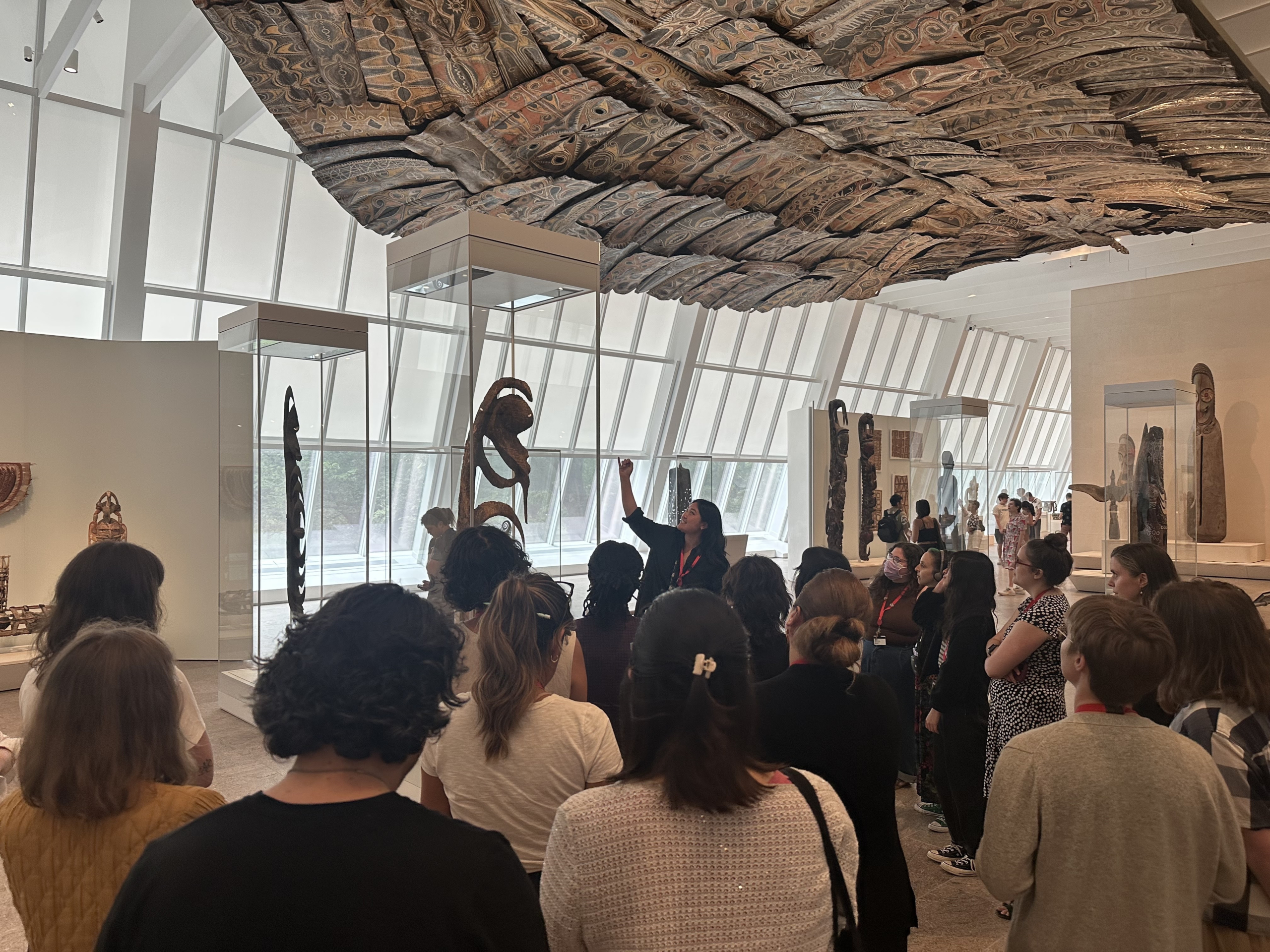
Discussing the hook carving technique of the Figure (Yipwon) (1978.412.854). Image credit: Niki Ye
My time at The Met was nothing short of life-changing and gave me a renewed sense of drive in pursuing a career in conservation. In addition to the incredible education this internship provided me, I’ll cherish the mentorship I received from my supervising conservators and the camaraderie I shared with other emerging conservation professionals. I loved every second of my experience and left with a refined perspective on the profession.
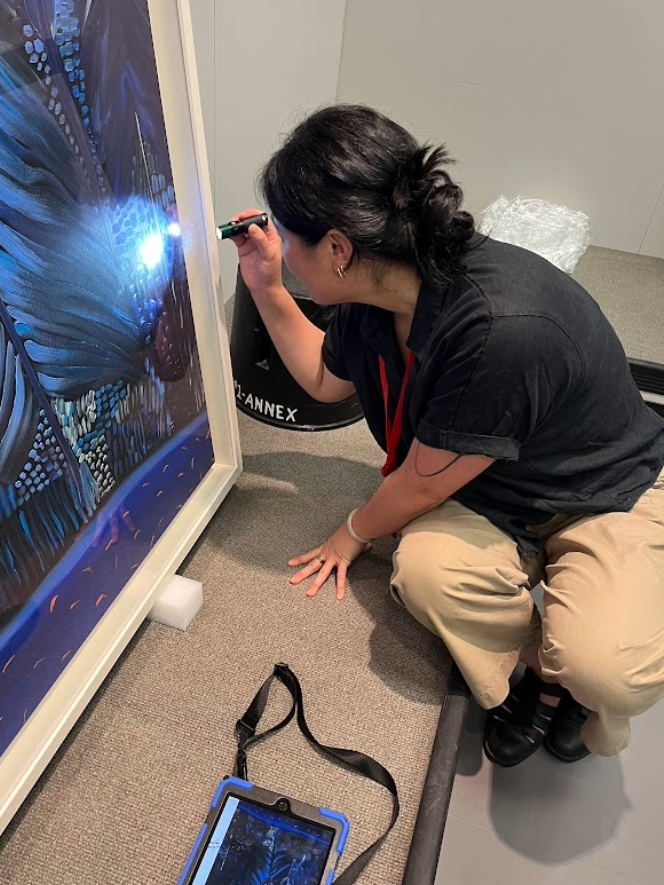
Condition checking an outgoing loan.
Image credit: Madison Conliffe
Congratulations on all of your accomplishments Marianne!
To learn more about the program please visit the website below:
